
Recently, the highly anticipated 27th China Robotics and Artificial Intelligence Competition National Finals were held. In this national high-level competition in the field of robotics and artificial intelligence, students from our university staged a peak showdown with more than 1,200 teams from Harbin Institute of Technology, Xi'an Jiaotong University, Dalian University of Technology, and otheruniversities that advanced to the finals. With outstanding performance, our school has currently won 4 national first prizes, 9 national second prizes, and 9 national third prizes, fully demonstrating the school's hardcore strength in talent cultivation in the field of robotics and artificial intelligence.
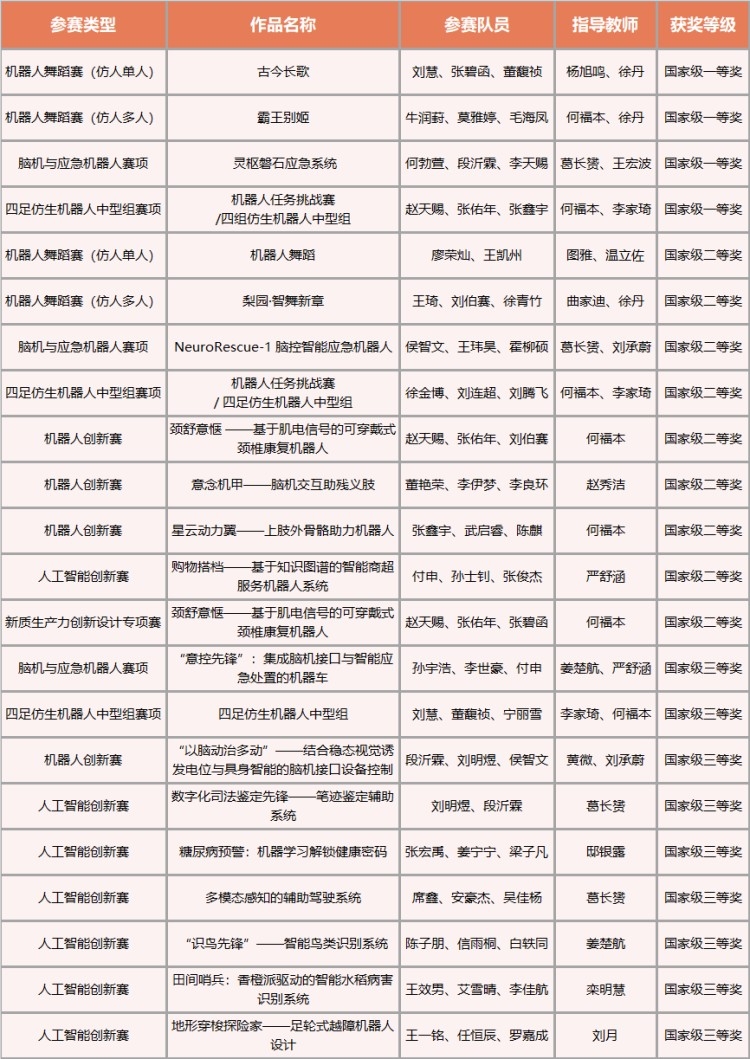
List of Awards Won by Our School in the 27th China Robotics and Artificial Intelligence Competition National Finals
The China Robotics and Artificial Intelligence Competition is a nationwide academic competition with a long history and wide influence. It is also one of the largest, most influential, and highest-level robot competitions in China. It has been included in the National Rankings of Discipline Competitions for Ordinary Colleges and Universities and the National Analysis Report on Collegiate Competitions for Ordinary Colleges and Universities, both published by the China Association of Higher Education. This year's competition is hosted by the China Association for Mechatronics Technology and Application, organized by the Harbin Institute of Technology Suzhou Research Institute, and co-organized by Suzhou Polytechnic University. The number of participants is the highest in history.
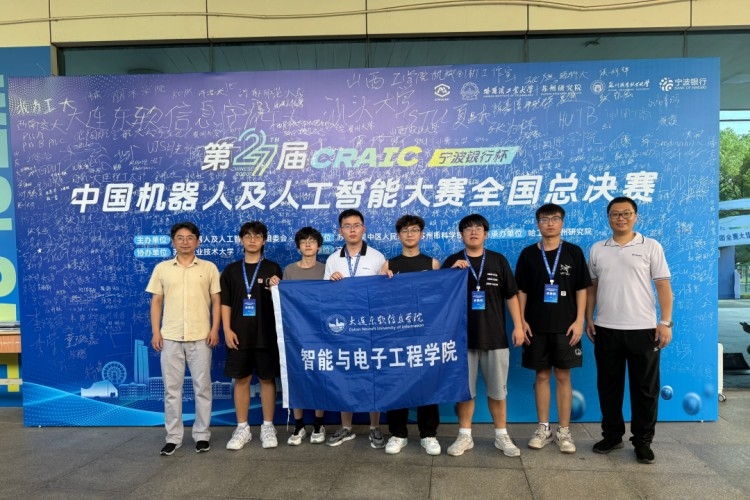
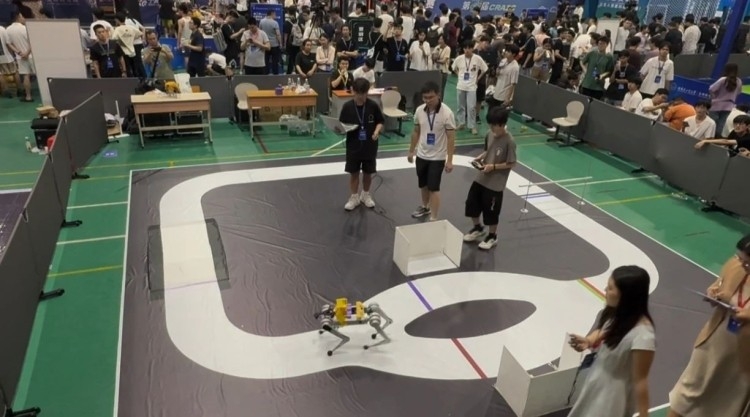
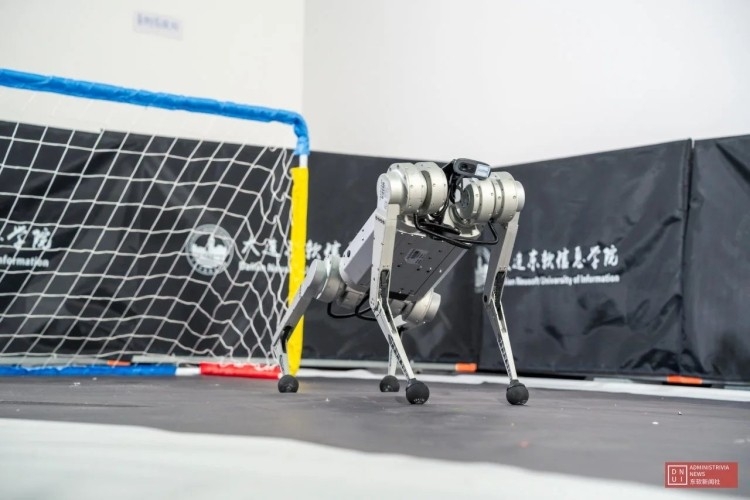
Our university's projects that won the national first prize were in the Robot Dance Competition, the Brain-Computer and Emergency Robot Competition, and the Quadruped Bionic Robot Medium-sized Group Competition. In the Robot Dance Competition, the project team focused on integrating multimodal perception, affective computing, and dynamic behavior generation technologies to create an efficient interactive closed-loop system covering intelligent question answering, dramatic performance, and high-difficulty motion coordination control. In the Brain-Computer and Emergency Robot Competition, the project team used brain-computer interface devices and technologies, along with embedded development technologies, to directly control the lower-level robotic vehicle with brain signals to complete actions such as moving forward, turning left or right, sounding the horn, flashing lights, etc., achieving the execution of complex tasks. In the Quadruped Bionic Robot Medium-sized Group Competition, the project team deeply integrated virtual simulation, environmental perception, and adaptive control technologies to build an intelligent closed-loop system covering complex terrain modeling, gait intelligent planning, virtual-real collaborative control, and real-time state monitoring.
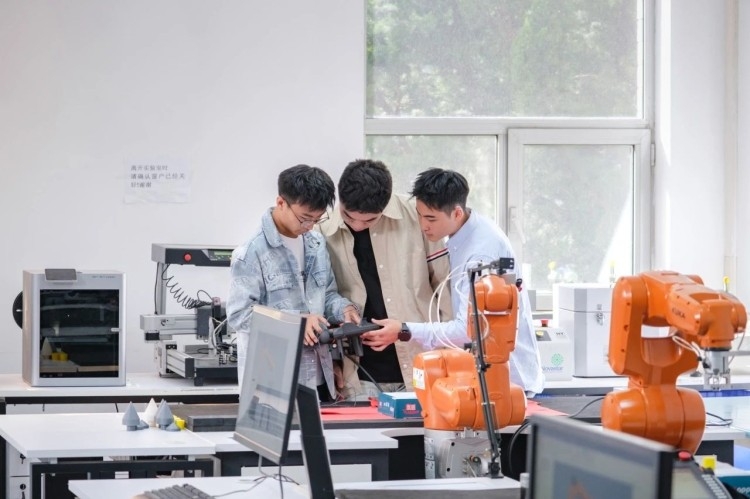
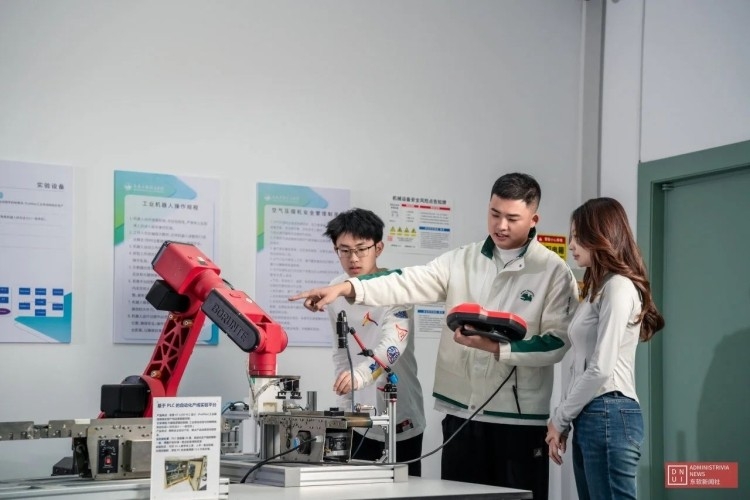
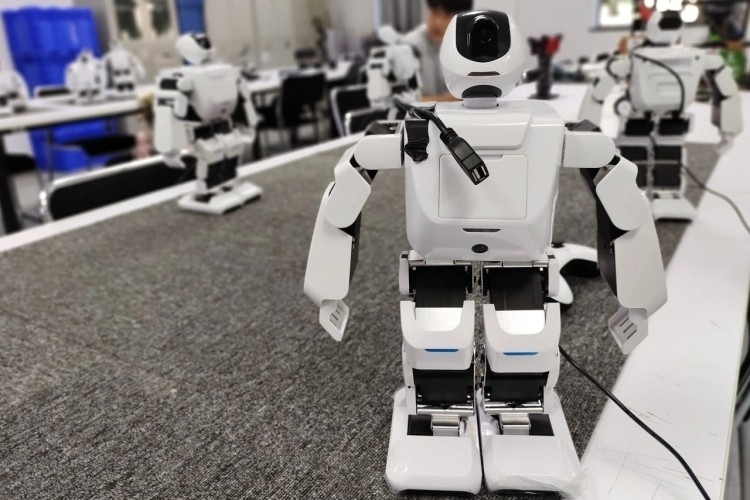
Our university has also conducted in-depth cooperation with multiple enterprises, including Leju Company, Shandong Youbotics Company, KUKA Industries, and Hikvision, in areas such as Aelos humanoid robot intelligent interaction practice, four-legged robot dog object transportation practice, all-terrain gait planning and control of four-legged robots based on digital twins, intelligent assembly of industrial robots, and industrial part recognition and defect detection practice, fully empowering students' ability improvement.